| SQL Function |
| |
| Aggregate functions |
| |
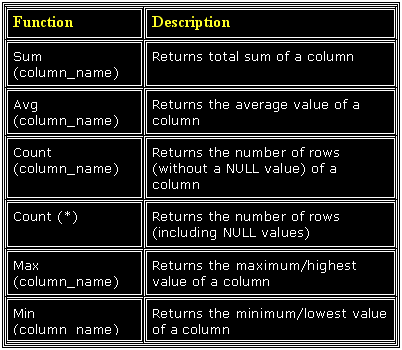
| Aggregate functions operate against a collection of values, but return a single value. |
| |
| Note: If used among many other expressions in the item list of a SELECT statement, the SELECT must have a GROUP BY clause!! |
| |
| Following are SQL Aggregate Functions with their description: |
| |
|
| |
| Syntax: |
| SELECT function_name(column_name) FROM table_name |
| |
| Example for the Employee table below: |
| |
|
| |
| We key in the query |
| SELECT Avg(Salary) FROM Employee |
| |
| will yield the result set that shows the average salary of the employees: |
|
| |
| Similarly we can use the sum function to Add all the numeric values in the selected table by typing in the following query: |
|
| |
| Lets take an example using Max function to find out the maximum value from the field-Age. We type the following query: |
| SELECT Max(Age) FROM Employee; |
| |
| which results in: |
|
| |
| Similarly we can use MIn function to find the minimum value from a column |
| |
| We key in another query which is slightly different from others because he function that we use here i.e, count(*), is not supplied with any column, as shown below: |
| SELECT Count(*) FROM Employee |
| |
| The above statement returns total number of rows in the Employee table i.e |
| |
|
| |
| |
|
|
| |
| |