| Session Management in JSP |
| |
| Including Requests |
| |
|
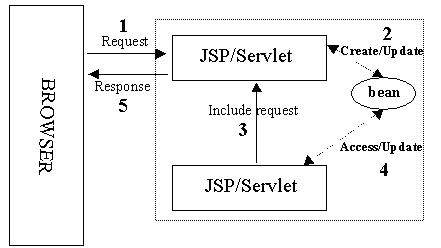
The <jsp:include> tag can be used to redirect the request to any static or dynamic resource that is in the same context as the calling JSP page. The calling page can also pass the target resource bean parameters by placing them into the request, as shown in the diagram: |
| |
|
| |
| Consider the following JSP page, say Bean1.jsp, which creates a named instance fBean of type FormBean, places it in the request, and forwards the call to the servlet JSP2Servlet. |
| Observe the way the bean is instantiated--here we automatically call the bean's setter methods for properties which match the names of the posted form elements, while passing the corresponding values to the methods. |
| |
| For example: |
| <jsp:include page="tutorial.jsp" flush="true"/> |
| |
| not only allows tutorial.jsp to access any beans placed within the request using a <jsp:useBean> tag, but the dynamic content produced by it is inserted into the calling page at the point where the <jsp:include> tag occurs. The included resource, however, cannot set any HTTP headers, which precludes it from doing things like setting cookies, or else an exception is thrown. |
| |
| |
| |
|
| |
| |