| Inheritance |
| |
| Inheritance |
| |
| Inheritance means getting something from the parent. In C++ also, inheritance means the same. But who is the parent? |
| |
| Remember that classes and objects are a key feature in C++. When we talk of inheritance in C++, we talk of classes. We will have the parent class and the derived class. The derived class inherits all properties of the parent class. |
| |
| The parent class is known as the base class. All the classes that arise from the base class are known as derived classes. These derived classes inherit all non-private parts of the base class. |
| |
| When any data is made private in a class, it can be accessed ONLY by member functions of that class. A derived class CANNOT access the private area of its base class. |
| |
| Let's take a look at the syntax for making a derived class. |
| |
| Syntax : |
| |
| The syntax is easy. Just create the base class as you normally would. Then when you want to create the derived class, just start with the following line: |
| |
| class d1 : public b1 |
| { |
| body of d1; |
| }; |
| |
| where d1 is the name of the derived class and b1 is the name of the base class. |
| |
 |
| |
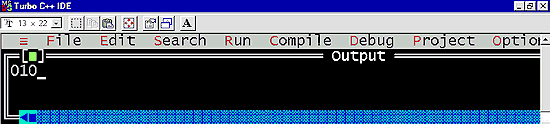
| Out put of the program |
| |
 |
| |
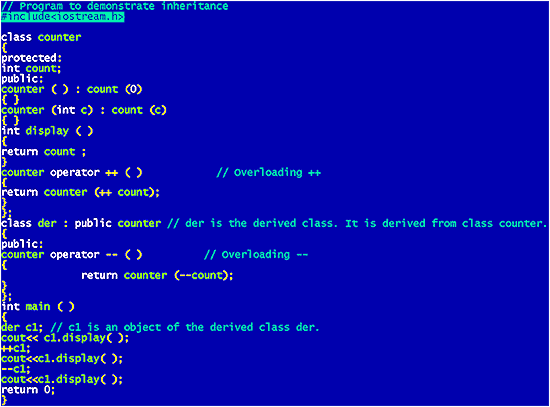
| We think you might have just one question. What's the meaning of protected? Well, as We said earlier, private data of a base class cannot be inherited by it's derived class. |
| |
| So the question arises as to how to make some data available to both the base and derived class? |
| |
| The answer is to make use of protected keyword. |
| |
| Protected data will be inherited by the derived classes. |
| |
| The rest of the program is as normal. |
| |
| |
|
| |
| |


