| Methods |
| 1. Are named modules of code |
| 2. May optionally receive one or more parameters (arguments) |
| 3. May optionally return a single value |
| 4. Are associated with either a class or an object of a class. The former are called "class methods" and are the focus of this lesson. The latter are called "instance methods" and will be covered in a later lesson. |
| Calling a class method |
| . Involves the following general syntax for the call expression: |
| class-name.method-name(arguments) |
| If the method is defined within the current class, the class name may be omitted and the general syntax for the call expression is: |
| method-name(arguments) |
| . Can occur anywhere the returned data type makes sense. Methods that return no value are called in a stand-alone statement. Methods that return a value are called within another expression. |
| This method pushes an object, the one passed in as an argument, onto the top of the stack, and returns it. |
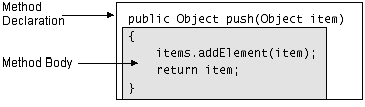 |
| Like a class, a method has two major parts: |
| 1. method declaration |
| 2. And method body. |
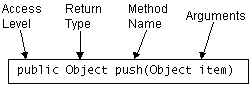
| The method declaration defines all of the method's attributes, such as access level, return type, name, and arguments, as illustrated here: |
 |
| The method body is where all the action takes place. It contains the Java instructions that implement the method. |
| The Method Declaration |
| At minimum, a method declaration has a name and a return type indicating the data type of the value returned by the method: |
| returnType methodName() { . . . } |
 |
 |
 |